How to Fix Prolapse After Hysterectomy
So you've had a hysterectomy and are now wondering how to fix a prolapse that has occurs and/or did not resolve. This blog will walk you though this scenario and give you specifics on what's next!
What Does It Mean to Have a Prolapse After Hysterectomy
Pelvic organ prolapse occurs when one of the pelvic organs (mostly the bladder or rectum) push into the walls of the vagina.
Pre-hysterectomy, you can have a prolapse of your uterus.
Many women undergo a hysterectomy due to uterine prolapse, but are unaware that removing the uterus does not remove the risk that surrounding organs can also prolapse.
In fact, the risk of prolapse of surrounding organs does increase with a hysterectomy.
Why Prolapse Happens After a Hysterectomy
It's important to know that a hysterectomy is major pelvic surgery. I feel like that patients are not made aware of this always.
Now, let's talk about structure.
There are many ligaments that hold up the uterus that have a major role in providing support to the surrounding pelvic organs.
During a hysterectomy, not only do you lose your uterus, but you lose most of the ligaments that support up the other pelvic organs. Due to this loss of support, the risk of pelvic organ prolapse increases.
Types of Prolapse That Can Develop
After a hysterectomy, there are two specific types of prolapse that are most likely to happen.
Namely bladder/urethral and rectal prolapse. Both of these occur as the organ pushes into the walls of the vagina.
Symptoms to Watch For
It's important to understand what to look out for.
Here are the common symptoms of prolapse after a hysterectomy:
Pelvic pressure
Heaviness
Sluggishness
Difficulty with bowel movements
Urinary incontinence
Feeling the presence of a vaginal bulge or seeing a bulge in the vaginal opening
Sometimes prolapse can also cause back pain, due to the pull the prolapse provides to the ligaments attaching to the spine
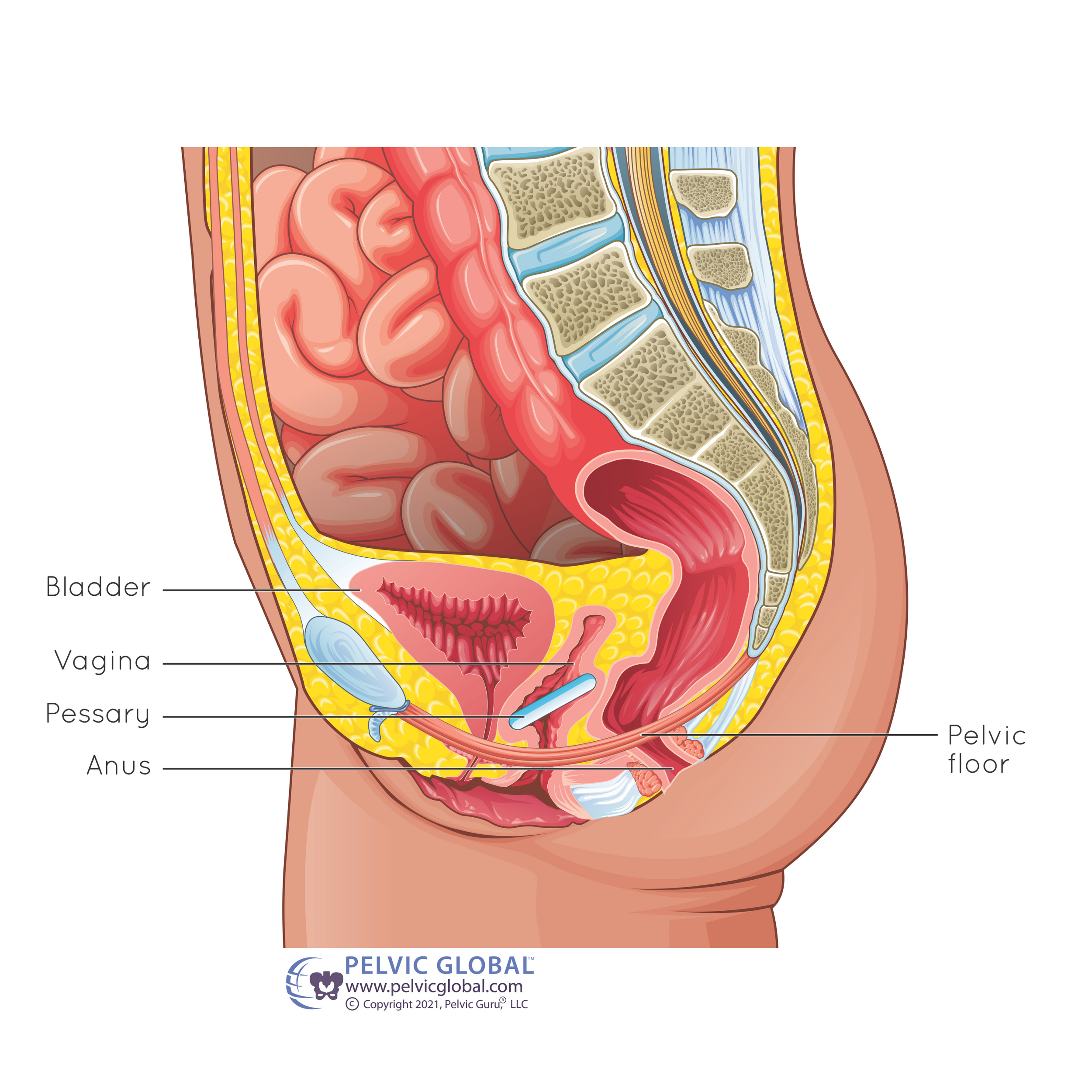
Image used with permission from Pelvic Guru®, LLC as a Pelvic Global Member
Non-Surgical Treatment Options
So, let's talk about what to actually DO about this.
There are non-surgical options available to you. Prolapse surgery is not your only option.
These nonsurgical treatment options for prolapse include prolapse treatment in pelvic floor physical therapy and a pessary (ps- we offer pessary fittings at Vivid!).
A pessary is a removable silicone device that you would wear vaginally. Think about it like a bra for your pelvic organs. It is inserted vaginally, similar to a tampon, and it braces the walls of the vagina to prevent anything from pushing into it.
In the image here, you can see what a pessary looks like after a hysterectomy (the image is accurate to post-hysterectomy!)
How Pelvic Floor Therapy Helps
Pelvic floor therapy helps with prolapse to help strengthen the pelvic floor muscles which help to give support to the pelvic ligaments.
Inside pelvic floor therapy, stretching and strengthening pelvic floor exercises as well as postures, movement, and breathing strategies will be utilized to help improve pelvic floor muscle activation and support, while decreasing pressure placed down on the pelvic organs.
This will actually treat the root cause and prevent further (or new!) prolapse.
Where to Find Prolapse Treatment in Bucks County
At Vivid Women’s Health, we offer a blend of pelvic floor therapy and pilates-based treatment in Doylestown and Newtown and would love to help you address your prolapse symptoms.
We proudly put our patients first by offering one-on-one appointments for a full hour. You will have time to be heard and we will take time to listen to your whole story.
You won’t be passed between different professionals, and we will work to get you a holistic solution to your pelvic health concerns.
We choose to participate in a private pay model so that we can focus on putting patients first.
We’d love to work with you. Feel free to schedule online or reach out to us if you have questions before getting started with prolapse treatment.