Is Pilates Good For Pelvic Floor Prolapse?

Pilates and pelvic floor prolapse are a great match when you know exactly what to look for and feel when you are practicing.
Let's talk about it. And PS- if you're looking to work directly with a pelvic floor therapist in a clinical pilates session, check out Vivid's pilates sessions.
What Is Pelvic Floor Prolapse
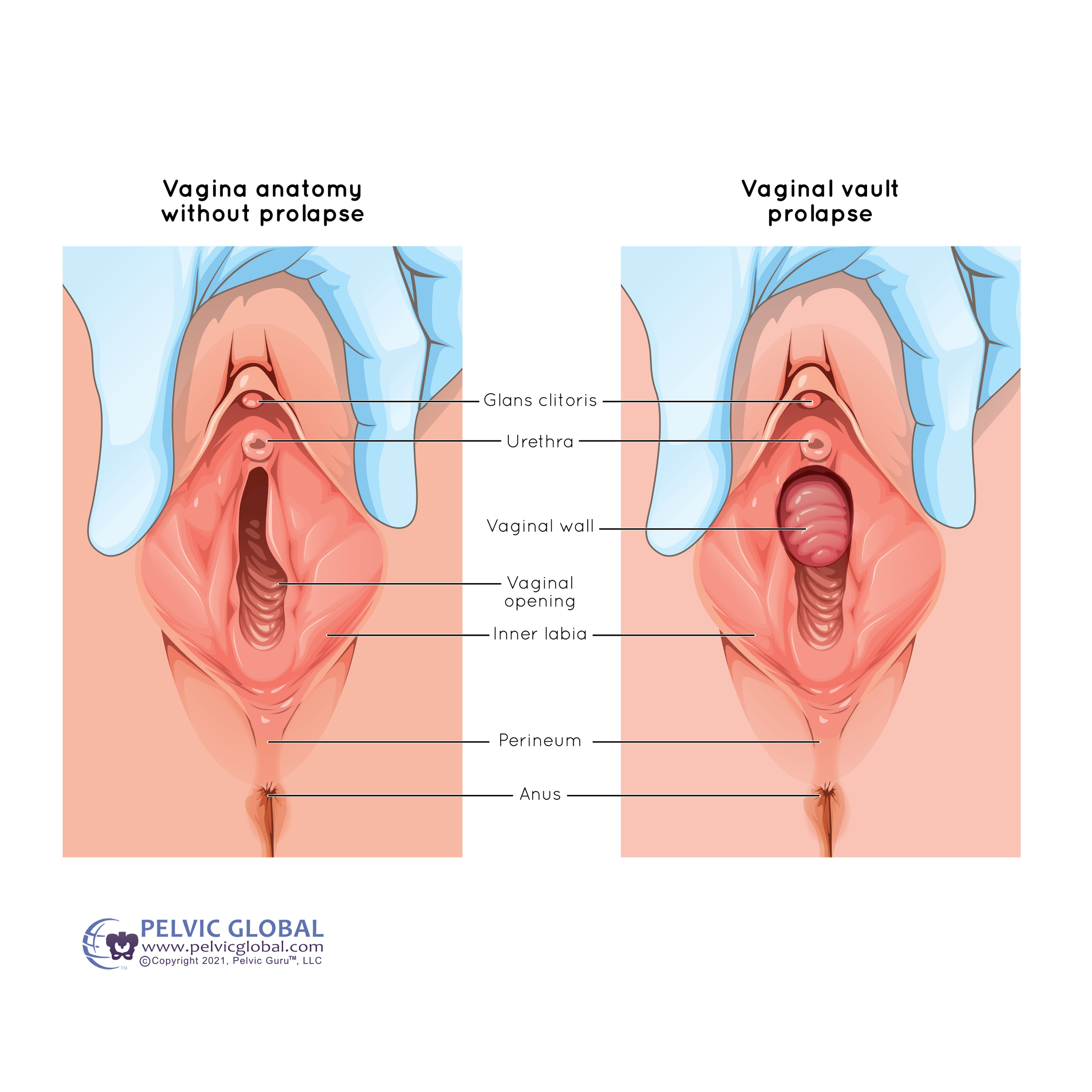
Image used with permission from Pelvic Guru®, LLC as a Pelvic Global Member
Pelvic Floor Prolapse is when an organ in the pelvis sits lower than normal. So, it moves outside of it's typical position. The image here shows what prolapse can look like.
Prolapse can occur to a variety of organs that sit within the pelvic cavity.
These organs include the:
Bladder
Urethra
Uterus
Rectum
Occasionally the small intestine
Some patients present with a single organ involved, and some present with multiple organs involved
Prolapse is graded based on the severity and position of the organ.
It's common to see prolapse after pregnancy, recurrent respiratory conditions that involve a lot of coughing, in powerlifters, and could be the result of hypermobility conditions such as Ehlers-Danlos syndrome.
How Pilates Affects the Pelvic Floor
Pilates is a wonderful exercise program that helps to target the core and pelvic floor muscle strength.
It is typically characterized by slow, progressive movements that require a lot of stability within the core and pelvic regions. Which... you guessed it... is perfect for the person who needs to engage their pelvic floor to help with managing a prolapse.
Pilates Movements That Are Safe With Prolapse
There are no specific movements that are safe/unsafe that can be applied generally to all people.
In general, we need to target exercises that are difficult enough to produce strength gains but not so difficult as to lead to compensation.
This differs person to person and exercise to exercise and needs to be progressed accordingly over time.
Typically, exercises such as roll-ups, boat pose, and planks can be a little bit more challenging to the core and thus the pelvic floor, and without proper strength and coordination, can be problematic to the pelvic floor.
Pilates Movements to Avoid With Prolapse
Exercises that feel too challenging to the core, or ones where you notice that your back starts arching, or your core starts bulging out, might not be the right fit for you right now.
It doesn’t mean that we can’t work towards those movements, but for right now, they may not be the best fit.
This is the benefit of working with a pelvic therapist as well, because your therapist is able to determine what exercises are most appropriate for you.
How to Modify Pilates for Prolapse
Typically, we recommend using a reformer, which helps to control the resistance through the core and pelvic floor and prevents bearing down on the pelvic floor.
Certain mat-based exercises can be more challenging, which may make it more difficult to keep proper form during the exercise, and therefore not as beneficial for prolapse symptoms.
When to See a Pelvic Floor Therapist Before Starting Pilates
We recommend seeing a pelvic floor therapist any time you are struggling with prolapse and want to start a new exercise program.
While pilates can be a great way to strengthen your core and pelvic floor, it is imperative that you work with someone who can ensure proper form to avoid progression of prolapse.
In our opinion, it's great to work with a pelvic floor therapist alongside doing Pilates so that you can get the best of both worlds
Where to Find Pilates-Based Treatment for Prolapse in Bucks County
At Vivid Women’s Health, we offer a blend of pelvic floor therapy and pilates-based treatment in Doylestown and Newtown and would love to help you address your prolapse symptoms.
We proudly put our patients first by offering one-on-one appointments for a full hour. You will have time to be heard and we will take time to listen to your whole story.
You won’t be passed between different professionals, and we will work to get you a holistic solution to your pelvic health concerns.
We choose to participate in a private pay model so that we can focus on putting patients first.
We’d love to work with you. Feel free to schedule online or reach out to us if you have questions before getting started.