How to Do Perineal Massage During Pregnancy
If you're pregnant and are spending time online, you've likely heard of perineal massage. This technique is utilized by many folks, but especially those who are pregnant, to prepare the pelvic region, specifically the perineum, for birth.
If you want to do everything you can to reduce your risk for birth-related trauma, like tearing, then perineal massage will be great for you.
Learn more about the technique, when to start, and the results you can expect inside this blog.
What Is Perineal Massage?
Perineal massage is soft tissue mobilization to the perineum (the space between the vagina and anus). This area is the space that most often tears during a vaginal birth, which means we want to prep it accordingly.
We utilize perineal massage both inside pregnancy PT & birth preparation sessions to help reduce the risk of perineal tearing during a vaginal birth.
Why Perineal Massage Helps During Pregnancy
Perineal massage helps to teach your body how to relax to the sensation of pressure in your perineum. It can help with stretching and improving elasticity in the perineum.
One of the things we hear regularly from patients is that they have been told that in order to have an "easy" birth, they should do endless Kegel exercises to make their pelvic floor strong.
But this actually couldn't be more false- most times, our patients need to learn how to relax and lengthen their pelvic floor and allow for stretching of the muscles and connective tissues of the pelvic region.
Perineal massage is a part of that. And that means doing perineal massage (along with other things!) can help to reduce the risk of severe perineal lacerations, or birth trauma/tearing.
When to Start Perineal Massage
You can start doing perineal massage anytime after you are 33 weeks pregnant. You might be thinking that if you have the time, why not start sooner?
While we can understand that sentiment, there isn't solid research indicating that more and "for longer" is better. Beginning at 33 weeks is sufficient, so we continue to recommend that.
What You Need to Get Started
One of the best parts about perineal massage is that you basically need nothing but what you already have to get started. Yay!
Here are our recommendations:
You should be about 33 weeks pregnant
You don’t need any special tools to help you get started, just your finger
You may like some light lubrication (but not too much or you will be sliding all over and won’t get a good grip!)
Step-by-Step Perineal Massage Instructions
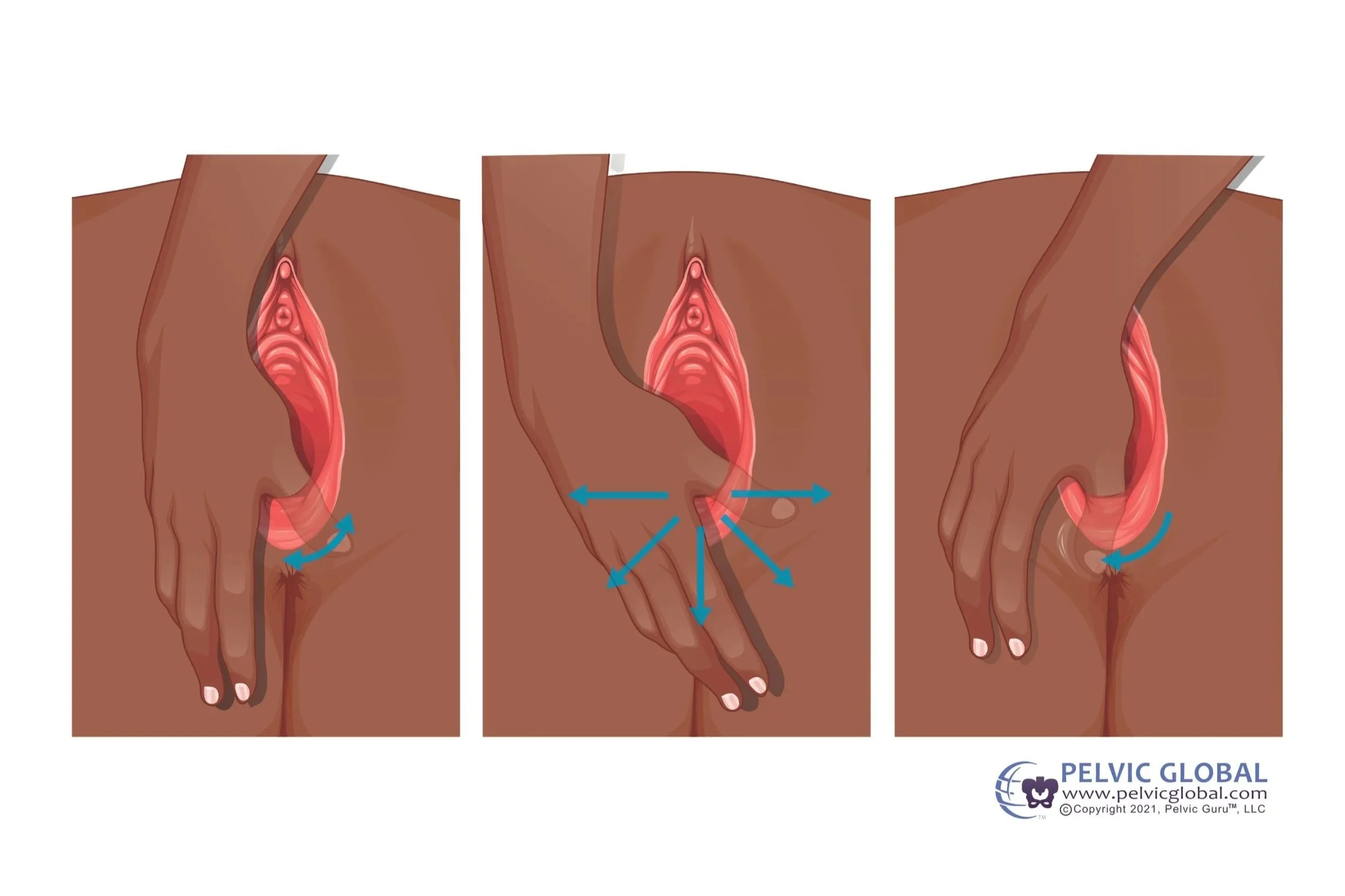
Image used with permission from Pelvic Guru®, LLC as a Pelvic Global Member
Wondering how to do perineal massage? Here's a step-by-step protocol.
As you read the steps, reference the image shown here.
I'd be remiss if I didn't mention that if you're having difficulty or want to make sure you're massaging correctly, or even if you want to move beyond just perineal massage, we'd love to help you in a pregnancy PT or birth prep session.
Here's what to do:
You can perform perineal massage lying or while standing.
Lying Down
For lying, you will lie on your back, propped up with a few pillows so you're not completely flat
With your dominant hand, you will insert your thumb into the vaginal canal (to the first knuckle)
You can then gently push your thumb down into the anus and make a “smiley face” motion for about 20 seconds. If we envision your vaginal opening like a clock- 6 o’clock is towards the anus, you would sweep from 4 o’clock to 8 o’clock.
Relax
Repeat for 5 minutes
Standing Up or Sitting
We typically prefer standing, as it is ergonomically easier to do on yourself.
If you were standing, you’d put one foot on a footstool, and if you were sitting, you’d prop yourself up with a few pillows
You can insert one thumb into the vaginal opening (to the first knuckle)
You push down towards the anus with moderate pressure while making a "smiley face” sweeping motion for 20 seconds
Relax
Repeat for 5 minutes
How Often to Do Perineal Massage
As with most things, more is not always better. You can do perineal massage daily, but typically we recommend 3 days per week
Tips for Doing It Comfortably
Since you'll be spending a decent amount of time doing this, we want to make sure you're comfortable!
In lying, use pillows to prop yourself up and support yourself.
You may also need some pillows under your knees so that you can open your knees wider and relax your legs out.
When you're sitting, feel free to prop yourself up with some pillows.
In standing, it can be helpful to stand on a softer floor (like carpet or a rug). Try not to stand with your knees locked out. Allow a little bit of bend in the leg that is on the floor.
When to Ask for Help From a Pelvic Floor Therapist
If perineal massage is painful or makes your pelvic area sore, you should consult with a pelvic PT before continuing.
You should also discuss perineal massage if you’ve had a previous perineal laceration/perineal tearing.
And, as always, if you're someone who wants to make sure that you're doing perineal massage correctly or want to dive deeper into birth prep work, then you should reach out to a pelvic therapist.
Common Mistakes to Avoid
Before I wrap up, I want to mention that it's super important that you try to be very relaxed. Avoid being too stiff when performing perineal massage since the goal is to relax the tissue.
You don't want to fight against yourself when doing this work.
Things that can help: breathing (box breathing, yoga breathing, think slow in/out), positioning that is comfortable, and an environment that is calming, whatever that may look like for you.
Where to Find Pregnancy PT and Birth Prep in Bucks County
If you’re local to Doylestown or Newtown, PA, we’d love to help you with perineal massage and prepping for birth.
We offer pregnancy pelvic therapy and birth prep sessions for those who are pregnant and want to prep for an optimal birth and decrease the risk of birth-related injury, trauma, and tearing.
We’d love to work with you. Feel free to schedule online or reach out to us if you have questions before getting started.
We proudly put our patients first by offering one-on-one appointments for a full hour. You will have time to be heard and we will take time to listen to your whole story.
You won’t be passed between different professionals and we will work to get you a holistic solution to your pelvic health concerns.
We choose to participate in a private pay model so that we can focus on putting patients first.